The energy price cap has risen again. Low-carbon retrofit is how we respond differently. – Tom Woolley, Metis

Summary
The energy price cap has risen again, leaving households more exposed to volatile global gas markets. Short-term support can ease pressure, but it will not solve the underlying problem. Low-carbon retrofit offers a more resilient response: helping households generate, store and use their own energy, reduce grid dependence and lower bills from day one. Funded models make this possible without upfront cost, credit checks or reliance on subsidy.
Rising energy prices show why household energy resilience can no longer wait
This week’s announcement from Ofgem confirmed a 13% increase in the energy price cap from July, pushing the typical annual household bill to around £1,862.
That’s an increase of over £200 per year for many households.
It’s being driven, once again, by rising wholesale gas prices due to global instability. Gas bills are rising significantly faster than electricity, reinforcing a persistent truth: UK households remain heavily exposed to global fossil fuel markets.
The pattern is clear. The response needs to change.
We’ve been here before. Prices rise. Pressure builds. Interventions are debated. But the underlying issue remains unchanged. Households are still passive consumers, bills remain tied to volatile markets, and affordability is treated as a short-term issue rather than a system redesign challenge.
Price cap rises should be treated as a signal to accelerate low-carbon retrofit
Each price cap announcement should no longer be seen as a shock, but as a signal. A signal that waiting for prices to fall is no longer a strategy, and subsidy-led approaches alone will not scale.
The solutions already exist – but they need reframing.
Solar PV, battery storage, and smart tariffs are proven. But adoption has been constrained by upfront costs of £8,000 to £12,000, the need for residents to take financial risk, and complex decision-making.
Low-carbon retrofit needs to be treated as infrastructure, not a consumer purchase
A different approach is emerging, treating energy assets as infrastructure, not consumer purchases.
Through this model, households pay £0 upfront, require no credit, and benefit from a simple, supported experience delivered through trusted partners like Local Authorities.
This changes the affordability equation entirely.
Instead of asking whether participating households can afford a £10,000 system, we ask whether they can afford their current £100/month energy bill.
Because if they can, then there is a better alternative.
One where households generate and store their own energy, reduce grid dependence by up to 85%+, and pay £50 to £60 per month for a service that delivers immediate savings.
Critically, this provides over £300 in net annual savings from day one.
In Oxfordshire, this model is already working
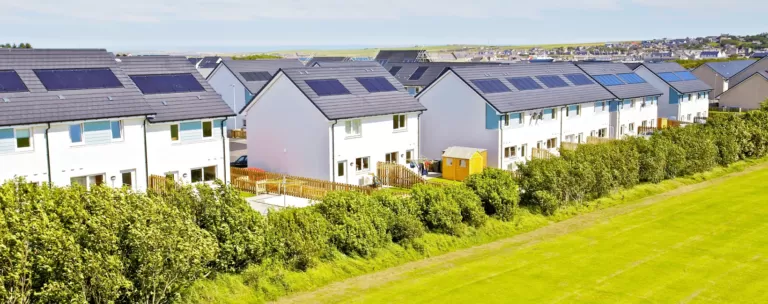
After 12 months, households have achieved £1,105 in gross savings and around £375 in net savings after subscription costs. 85% of residents chose to adopt, with 100% paying their subscription on time.
This is not a concept. It is proven infrastructure in action.
The sector must prioritise models that remove cost, risk, and complexity for households
With continued price volatility expected and government support becoming more targeted, households remain exposed. This creates a clear need for solutions that do not rely on subsidy, do not require resident capital or credit, and deliver immediate savings.
The sector must prioritise models that remove upfront cost, simplify adoption, deliver £300+ net savings immediately, and improve resilience by reducing reliance on centralised energy systems.
Rising prices should trigger action, not another cycle of short-term support
The price cap rising again should not just trigger concern. It should trigger action.
We now have a proven, scalable model that reduces bills today.
The question is no longer whether we can do this. It’s whether we choose to.